Lower School

Where children discover the joy of learning through story, art, movement, and hands-on experience.

You want your child to love learning, to wake up excited about school and come home bursting with stories. You want your child to be seen, with teachers who know their strengths and understand their struggles. And in an era of constant screens and mounting academic pressure, you want a school that protects your child's focus, creativity, and emotional wellbeing. A place where childhood is honored as the foundation for everything that comes next.

At the Lower School, that's exactly what we offer: a sanctuary where children in grades one through five discover the joy of deep learning. Here, math comes alive through cooking and woodworking. History unfolds through storytelling and signature trips. And your child develops the curiosity, critical thinking, and love of learning that will serve them for life.

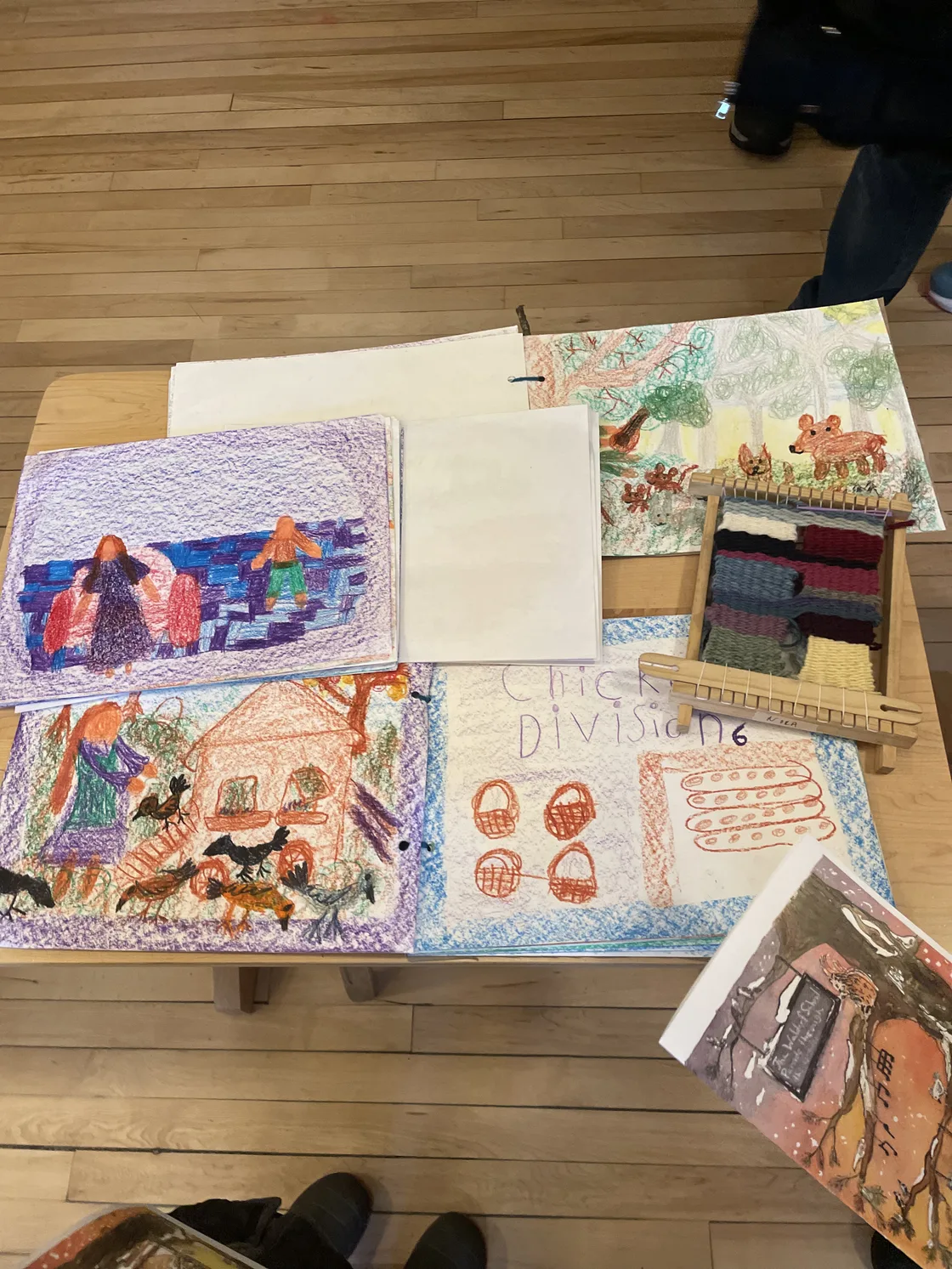
Students creating detailed illustrations in their Main Lesson books

Learning Comes Alive

Students create their own beautifully illustrated Main Lesson books. Each page reflects what they've learned - combining writing, drawing, and personal understanding into something they're proud to keep.

What Makes Our Program Different

1

The Class Teacher

A single teacher guides your child from first through fifth grade. This continuity transforms the relationship from transactional to transformational.

  • Your child's teacher knows their learning style, their social dynamics, and what makes them light up.

Your child is seen, supported, and guided as an individual.

2

Learning Through Doing

Fractions through baking bread. Geometry through woodworking. History through epic storytelling and class plays.

  • Academic subjects come alive when children experience them rather than just observe them.

Your child develops curiosity, critical thinking, and a genuine love of learning.

3

Time to Be a Child

Phone-free classrooms. Minimal homework in early grades. Rich outdoor play.

  • In an age of mounting pressure and fractured attention, we protect what childhood needs most: time to focus, create, and connect.

We're building something important: the capacity to focus, create, and connect.

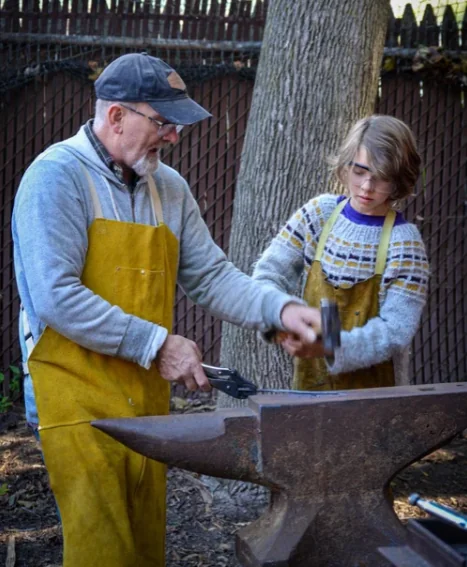
Teacher and students gathered outdoors for a storytelling lesson

A Teacher Who Truly Knows Your Child

Waldorf students develop personal relationships with their teachers, creating a relaxed environment and love of learning. In grades one through five, the same main teacher provides continuity and a consistent point of contact for parents while at the same time specialty teachers provide exposure to different teachers and teaching styles. Going back to school is more of a highly anticipated reunion with a teacher and class familiar to your child than a stressful unknown. Waldorf teachers actively spend time contemplating what your child needs to grow.

How We Teach

The Main Lesson Block

Each day begins with two focused hours on a single subject, studied intensively for 3-4 weeks. This creates depth rather than surface skimming.

In lieu of standardized text books, students create personal main lesson books, bringing their own writing and artistic expression to their learning. Meaningful tests and assessments are designed and used by teachers for gauging learning and increasing motivation. Younger grades include no standardized tests.

Reading

A strong foundation for literacy is provided through language-rich stories, songs and circle times, as well as through active physical play and movement. Reading instruction begins in first grade through learning to write first.

By second grade, most children are reading fluently - and because they learned with joy, they become lifelong readers.

Math

All four operations are introduced in first grade through story characters. Students work with patterns and relationships, understanding the why behind the symbols. In this way, a strong quality of number sense is developed in our youngest students and continued up through the grades with fractions, decimals and percentages following in grades three through five.

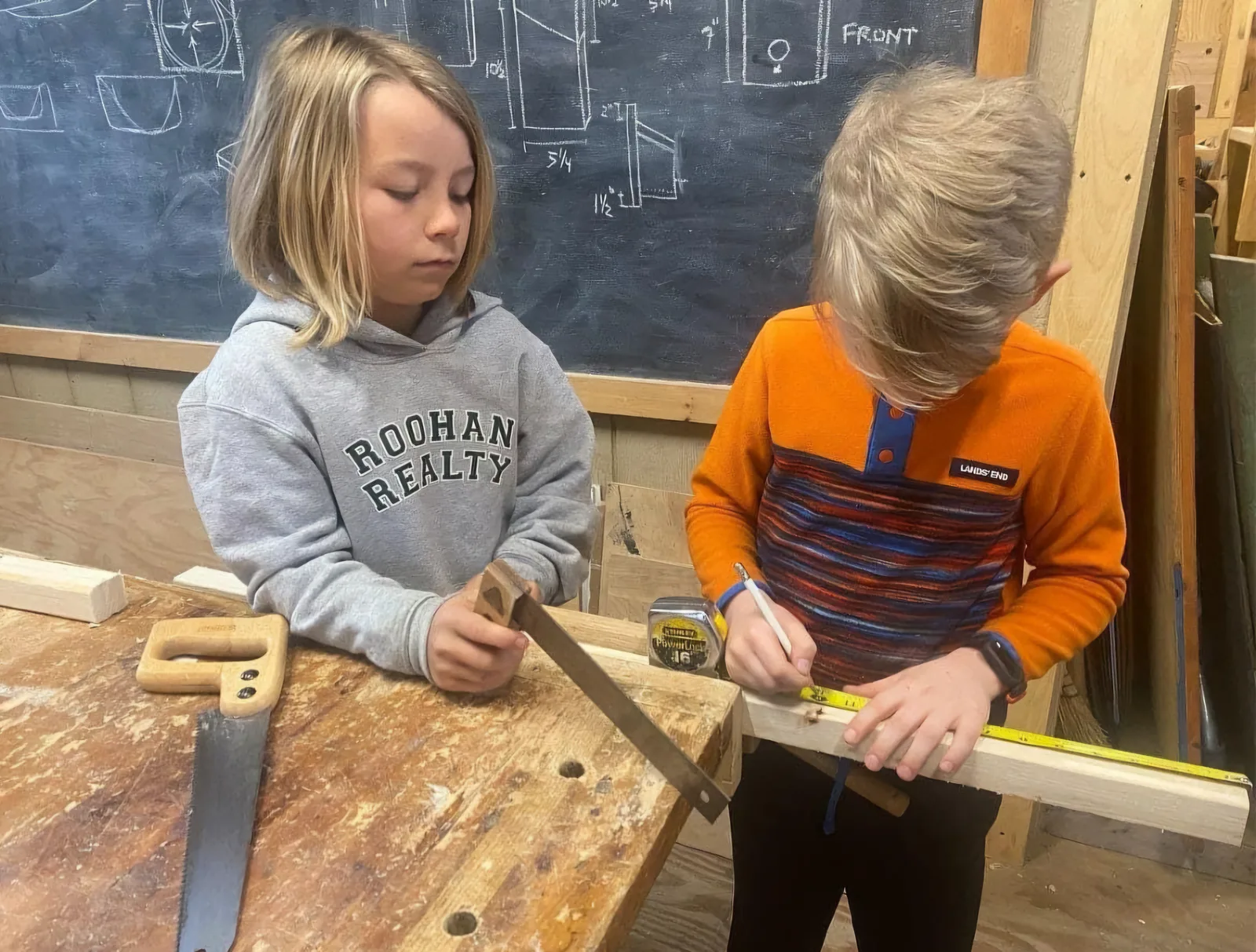
Two students working with saws and measuring tape in the woodworking workshop

Hands and Mind Together

Woodworking, handwork, painting, and music aren't extras - they're central to how children learn. Working with their hands develops focus, patience, and the kind of deep thinking that transfers to every subject.

Curriculum Highlights

Grade 1 2 3 4 5
Theme/ Story Fairy tales Fables and legends Hebrew scriptures/ pioneer life Norse mythology/ Native American life Ancient Civilizations – India, Persia, Mesopotamia, Egypt, Greece
Subject Annual class play / personal Main Lesson books
Language Arts
  • Pictoral introduction to the alphabet
  • Writing familiar poems/ sentences, then reading them
  • Choral recitation
  • Phonetic patterns and word families
  • Personal writing into reading
  • Early readers
  • Basic grammar
  • Punctuation
  • Sentence structure
  • Spelling patterns
  • Reading practice
  • Framework for original compositions
  • Grammar
  • Spelling patterns
  • Independent reading
  • Descriptive and narrative writing
  • Grammar skills/ vocabulary development
Mathematics
  • Number quality
  • Counting
  • Imaginative introductions to arithmetic operations and practice (+, −, ×, ÷)
  • Place Value
  • Regrouping
  • Borrowing and carrying
  • Rhythmic times table practice
  • Long division
  • Long multiplication
  • Measurement/ telling time
  • Rhythmic times table practice
  • Fractions
  • Times table mastery
  • Regular skills practice
  • Freehand Geometry
  • Averages
  • Decimals
  • Tables and charts
Natural Science Nature stories and exploration Farming, clothing, shelter Preliminary physiology and zoology – human and animal Botany
Geography Home and school surroundings New York/ mapmaking North America
French Songs, poems, and games Grammar begins French
Music Singing in unison and pentatonic flute Singing in rounds, soprano recorder, strings Soprano recorder, string instruments, singing in harmony Three-part singing, alto recorder, and string instruments
Drawing Spatial orientation Symmetry 4-way mirroring Braided designs Painting and drawing
Painting Color quality Interplay of color Landscape Animal and environment Painting and drawing
Sculptural Arts Modeling with beeswax Modeling with clay/ wax Clay and/or wood Woodworking: Basswood letter opener
Gardening Indoor seed planting Spring planting Fall harvest Ecology study Botany (garden)
Handwork Knitting Crochet Cross-stitch Knitting socks with four needles
Eurythmy Moving in a whole circle Moving in symmetry Moving in (star) patterns Facing front while moving Ongoing development of social movement
Movement Rhythmic circle games, bean bags, jump rope, hand-clapping Games featuring the individual within a group, gymnastics Pentathlon and gymnastics

Frequently Asked Questions

Is there homework?

Homework is minimal in the early grades, increasing gradually as children develop the capacity for independent work. We believe young children benefit most from unstructured time at home for play, family connection, and rest.

By fourth and fifth grade, children have regular assignments that build responsibility and study habits.

Are academics prioritized?

Academic excellence is central to what we do - we simply approach it differently. Our students master reading, writing, mathematics, and the sciences through a curriculum that engages the whole child. When children learn through multiple modalities, combining intellectual work with artistic expression, movement, and hands-on practice, they develop stronger critical thinking, better retention, and more creative problem-solving skills.

Research consistently shows that this approach produces students with deeper understanding and stronger academic outcomes. Our students develop not just knowledge, but the curiosity, creativity, and confidence to apply what they've learned in new situations.

How are children prepared for middle school?

By fifth grade, children have strong foundations in reading, writing, mathematics, and the arts. They've developed study skills through Main Lesson work, collaboration skills through group projects and plays, and self-discipline through handwork and practice.

They transition to middle school (whether at Waldorf or elsewhere) well-prepared for increased academic demands.

What about children with learning differences?

Our relational approach and small class sizes allow teachers to know each child's learning style and adapt accordingly. The multi-sensory curriculum - engaging visual, auditory, and kinesthetic learners - supports diverse needs.

Many children who struggle in traditional settings thrive in Waldorf's hands-on, arts-integrated environment. We work closely with families to ensure each child receives appropriate support.

Is Waldorf education religious?

Waldorf schools are non-sectarian and non-denominational. We educate all children regardless of their cultural or religious backgrounds, and our curriculum seeks to bring recognition and understanding of all world cultures and religions. We are not part of any church and espouse no particular religious doctrine, though our approach is based on a belief that there is a spiritual dimension to the human being and to all of life. Our families come from a broad spectrum of religious traditions.

Are Waldorf Schools Art Schools?

Waldorf schools are not art schools. The curriculum offers a classical education in all academic disciplines that fully integrates the arts into its teaching methodology. Why? Because research continues to show that the inclusion of the arts in academia increases aptitude and creative thinking in areas such as math and science, and has a positive effect on emotional development as well.

My children wake up excited about school. They come home bursting with stories - the mythology they're learning, the bread they baked, the play they're rehearsing. Learning is an adventure for them.

Andrea P., parent of 2nd and 4th graders

Ready to Visit?

The best way to understand what makes Waldorf Lower School special is to experience it yourself. Schedule a tour to see our classrooms, meet our teachers, and feel the warmth of our community.

Contact Admissions
Email: admissions@waldorfsaratoga.org
Phone: (518) 587-0549

Continue the Journey

Waldorf Lower School builds on the foundation established in Early Childhood and prepares children for Middle School, where deeper academic work, increased independence, and adolescent development are met with the same care and intentionality.

Ages 18 months - 6 years

Early Childhood

Where the foundation begins. Play-based learning, nature immersion, and the warmth of consistent caregivers prepare children for the journey ahead.

Learn More
Grades 6-8

Middle School

Where thinkers, makers, and leaders emerge. Rigorous academics, signature trips, and a phone-free sanctuary that builds focus and resilience.

Learn More