
Hands-On Academics
Students learn through stories, numbers, movement, drawing, writing, experiments, discussion, and real work with real materials.
Now enrolling Grades 1–8 for Fall 2026. New tuition: $10,500 per student, with a $25,000 family maximum.
Grades 1–8 Enrollment
Waldorf School of Saratoga Springs is now enrolling for Fall 2026. Our students learn in small, screen-free classrooms through strong academics, the arts, movement, practical work, and close relationships with their teachers.
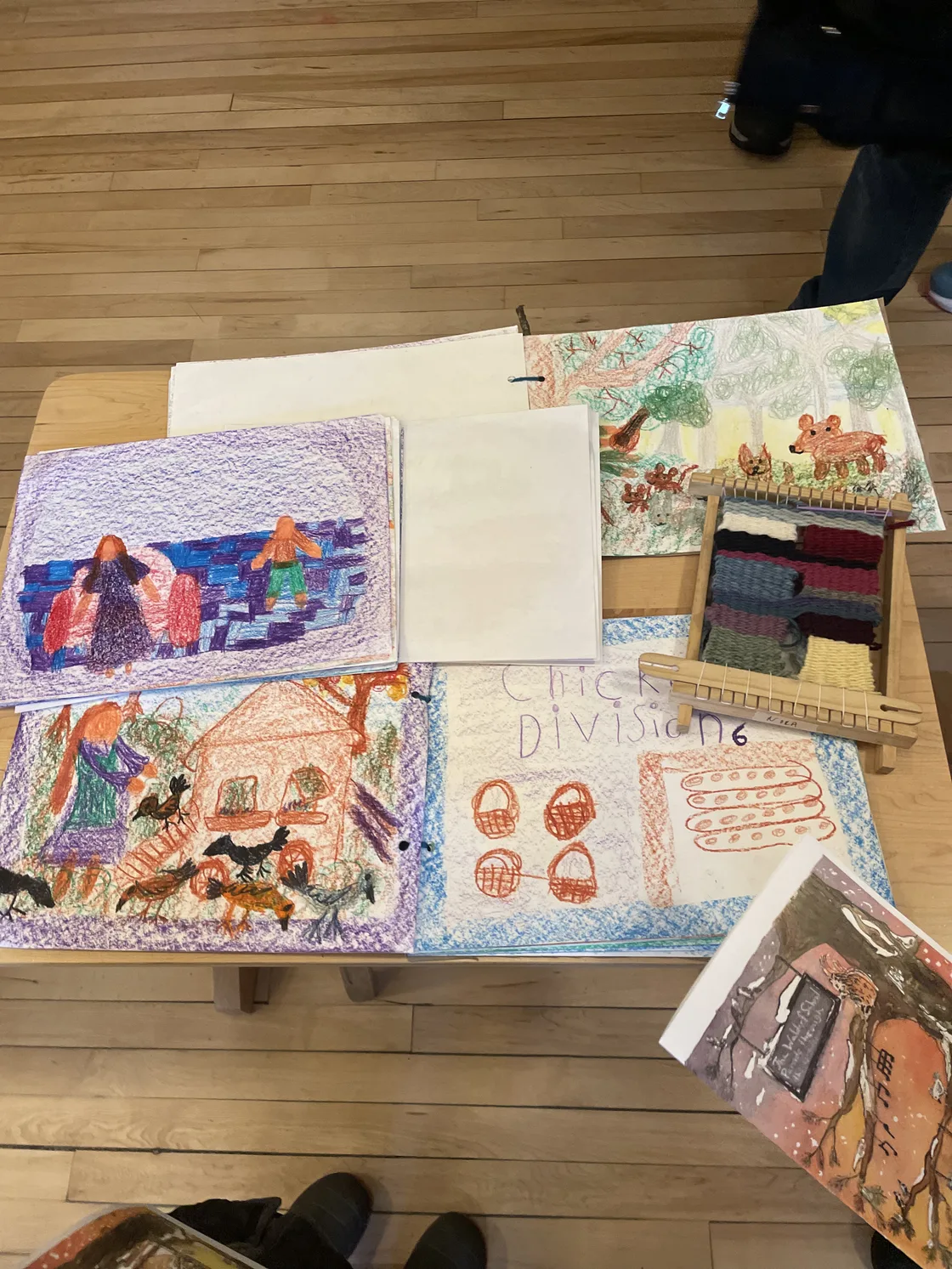
For more than 40 years, Waldorf School of Saratoga Springs has offered children a school day grounded in strong relationships, purposeful work, creativity, movement, and direct experience.
Some families are looking for smaller classes. Some are looking for a calmer, more human pace. Some want their child to spend less of the school day on screens and more of it building, reading, moving, drawing, listening, writing, calculating, singing, gardening, and solving real problems with real materials.
Others are simply wondering whether school could feel more joyful, more focused, and more connected.
At Waldorf, these priorities shape the rhythm of the school day.
Tuition is an important part of the school decision for many families. Beginning in 2026–2027, tuition for Grades 1–8 is $10,500 per student, with a $25,000 annual family maximum.
Grades 1–8: $10,500 per student
Annual family maximum: $25,000
Use the tuition calculator to estimate your family’s tuition.
In Grades 1–8, children need more than information. They need rhythm, relationship, challenge, imagination, practice, movement, and meaningful work. Waldorf education brings academics, the arts, practical skills, and social development together in a developmentally aligned school day.
Students learn through stories, numbers, movement, drawing, writing, experiments, discussion, and real work with real materials.
Core concepts are taught through human connection, active attention, and direct experience rather than classroom screens.
Lower school students are known by their teachers and classmates, creating a strong foundation for learning and belonging.
Music, drawing, painting, handwork, movement, and storytelling are woven into academic learning.
Children benefit from consistent relationships and a classroom rhythm that supports trust, focus, and growth.
Students spend meaningful time moving, making, building, exploring, and participating in the practical life of the school.
After visiting, we understood what we couldn’t quite see online: the children were focused, joyful, and deeply engaged. It felt like a place where our child could be known.
Come see it for yourself.
Waldorf education does not separate academic growth from the development of the whole child. Students build skills through repeated practice, careful observation, written and artistic work, oral presentation, movement, music, and hands-on investigation.
The result is not less academic seriousness. It is a different path into academic confidence: one that asks children to listen, remember, create, calculate, write, discuss, revise, and apply what they learn.
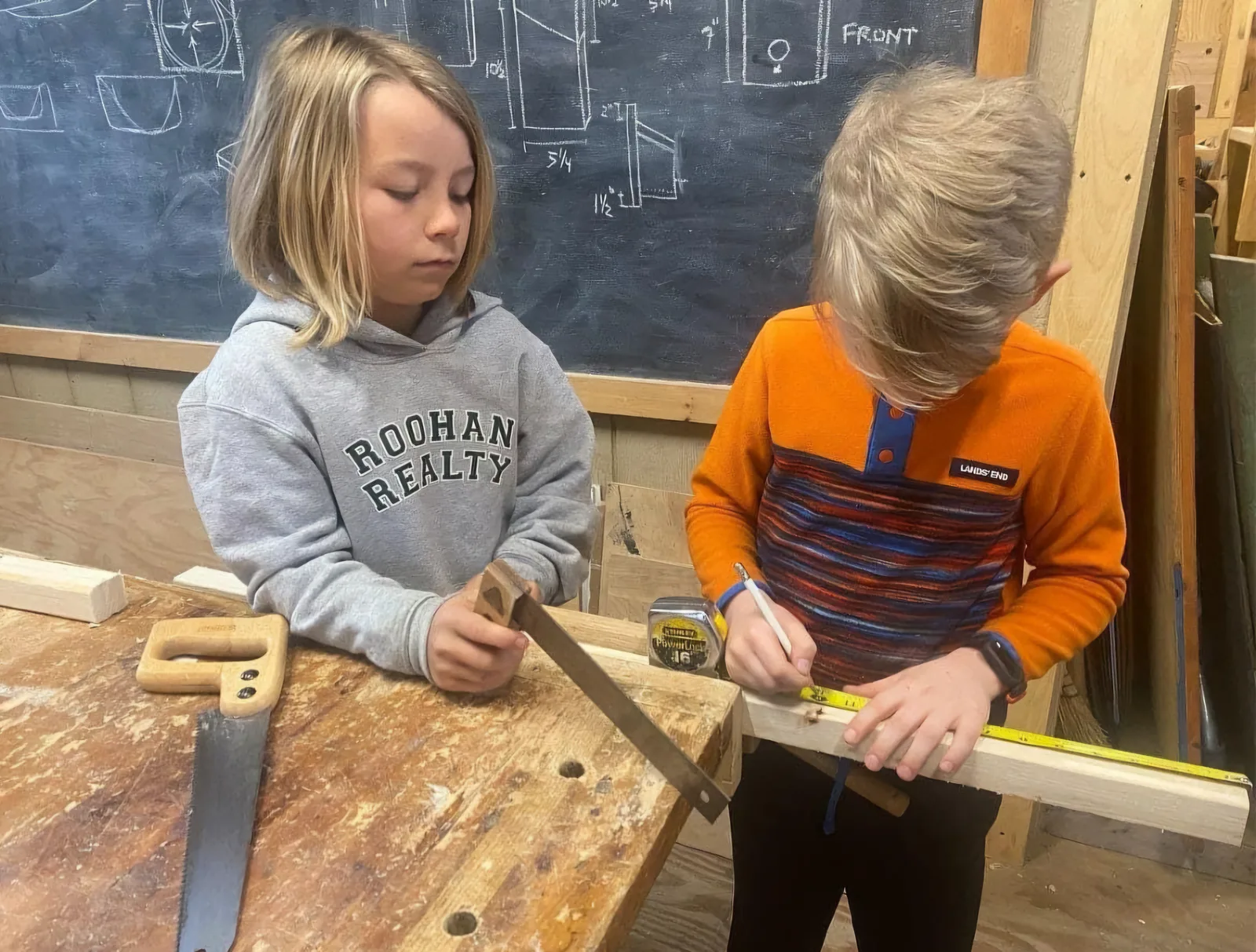
In the lower school years, children are developing attention, memory, coordination, imagination, emotional regulation, social awareness, and the capacity to work deeply. A screen-free classroom gives those capacities room to grow.
Instead of outsourcing attention to devices, teachers guide students through story, speech, music, movement, drawing, writing, experiments, practical work, and conversation.
This is not a retreat from the future. It is preparation for children to meet the future with focus, creativity, judgment, and a strong sense of self.
Waldorf education is a rich, time-tested approach to education whose popularity continues to grow, with more than 1,200 Waldorf schools worldwide. Waldorf offers a balanced, academically robust education that inspires true intellectual curiosity and wonder in children. We do not race from one milestone to the next. Rather, we cultivate children’s capacities as they emerge, building confidence and a love of learning naturally along the way—without the performance anxiety and “teaching to the test” that today’s parents are trying to avoid.
Waldorf schools prioritize hands-on, experiential learning, fostering adaptability, critical thinking and creativity. Our campus is intentionally screen-free. Instead of relying on screens to teach core academic concepts, our teachers engage students in all their senses, leading to increased focus and well-being. We find that hands-on, experiential learning helps young children focus and engage, and that reading and writing on paper supports their comprehension. Our teachers are able to work closely with students to help them understand concepts without relying on screens as “busy work.”
Waldorf students learn to write in first grade, studying each letter in depth—gaining a deep understanding of phonics—and using their senses to learn those letter shapes, tracing the letter “B” with their toes in the sand or forming the letter “S” out of the cushions they sit on. All the while, they build their literacy through story, song, movement and art, gaining vocabulary and narrative comprehension.
Waldorf introduces literacy through a combination of oral language, stories, movement, writing, phonics and artistic work. Our teachers observe each child’s development closely and provide additional practice and support as needed, so children build a genuine love of reading alongside their skills.
Waldorf teachers tailor their teaching to the skills of each class, creating dynamic and developmentally appropriate lesson plans, so children are often joyfully reading by age 7 or 8. Teachers have been known to light a candle to celebrate a class’ first reading of a simple reader, symbolizing that the light of knowledge is now theirs.
Instead of traditional letter grades to assess performance, teachers provide guidance and encouragement in the classroom that fosters a sense of inner satisfaction for work completed and well done. For math, this involves correcting mistakes rather than marking them wrong and not returning to them.
Though Waldorf students do take quizzes in middle school, teachers in elementary school and beyond use a holistic approach to assess how well students are grasping the subject matter they’re taught. Rather than judging their comprehension based on one moment in time, our teachers have the bandwidth to use a variety of metrics to assess a student’s learning, and have the freedom and flexibility to adjust the curriculum accordingly. Because the class teacher travels with the students through the curriculum for more than one year, the teachers have the time to learn who each student is and what will help each one learn best.
In lieu of report cards, children receive comprehensive year-end reports from their classroom teacher and each teacher of special subjects. True to the Waldorf approach, these narrative reports describe in detail how the child has progressed through the year, both where their strengths have emerged and areas of potential growth. Parents also learn about their children's academic progress, social development and emotional growth during two annual in-depth conferences, and through regular communication with teachers.
We define rigor not by how much information is presented, but by how deeply students are grasping each subject. Our teachers are attuned to not just how well students remember what was taught yesterday, but to how well they integrate their education across disciplines.
Waldorf teaches science and math with the goal of teaching students to think like scientists, making observations and discoveries for themselves, asking questions and collaboratively solving problems. In first grade, students are introduced to all four mathematical processes through story, and use manipulatives to make concepts like division (dividing gems among classmates) and fractions (slicing pizza for all) concrete realities. Middle school physics and chemistry use experiments to make sense of everyday experiences like the appearance of colors or the natural and industrial processes that lead to concrete. By eighth grade, students take these same processes into different number systems, like binary and octal, and sharpen the algebra skills they began the previous year.
Waldorf teachers understand that children learn not through lectures or memorization, but through action, art and nature. Our students employ engineering concepts through intricate woodworking projects, some of which take months to complete. Even our youngest children sew and knit, which require many engineering and geometrical concepts used in coding.
Homework is assigned at a teacher’s discretion, typically not until third or fourth grade. At that time, a teacher may start by giving students one assignment per week, with the goal of giving students the opportunity to practice personal responsibility. Emphasis is placed not on rote repetition of skills used in school, but on taking pride in one’s homework book, from their handwriting to the care they take in writing or solving problems. Students may also do work on class projects at home, using materials they already have at home to illustrate concepts they are learning in class, such as building a small model home from clay, sticks or other simple materials during the house-building block in third grade.
Our students thrive at numerous private and public high schools, and they go on to attend a wide variety of excellent colleges and universities. Professors who teach them often say that Waldorf graduates are adept at assimilating information and approaching their work with curiosity and creativity, and are leaders driven by a deep desire to make the world a better place.
We would be glad to meet your family, hear what you are looking for, and show you what lower school looks like at Waldorf School of Saratoga Springs.
Not sure if you are ready for a tour? Send us a question and we'll help you think it through.
Choose the program you'd like to visit and we'll take you to our scheduler.