
Notes from a workshop with Jane Swain
Jane Swain is a movement specialist. She has studied Spatial Dynamics with Jaimen McMillan and she works with Waldorf kindergartens throughout the United States. The following is a condensed version of some of the main points that Jane shared in her workshop about movement and child development.
We human beings are multisensory beings, and our greatest sense organ is our limb system. The world begins to make sense to us through our limbs. When we move, we gain knowledge about movement itself, dynamics, weight, balance, perspective, color, shapes, and so much more. Movement is a sensory-motor experience.
Movement creates the superhighways that cognitive learning will make use of later. Limbs know things that the head does not. For example, it is easier to teach knitting limb to limb, through showing it, rather than talking it out or reading directions. This limb-to-limb learning is what we call imitation. In kindergarten, imitation is the mode of education engaged. Teachers dig with shovels, rake leaves, scoop mud, set the table, and sing. And children follow along, digging, shoveling, raking and singing.
As young humans, we explore the world specifically through movement. Movement helps orient us in space and begins to organize our inner sense of our body in space. This is how our proprioceptive system is developed. The more movement, and varied movement, there is, the more neural pathways are being created.
The right brain begins to develop between the ages of 4 and 7. The right brain is engaged with visualization and mental pictures, movement of all kinds, music and emotions. This is why imitation (limb-to-limb learning) is the approach to learning that Waldorf kindergartens embrace. Puppet plays, stories, singing, yardwork, walks, exploration and imaginative play help strengthen the right brain.
In preparation for the left brain’s beginning development at age 7, specific kinds of movement are attended to in the kindergarten. These movements help strengthen a child’s relationship of the body in space and help to create the network of the corpus callosum, the bridge at the center of our brain that helps both hemispheres communicate with each other and work together. The corpus callosum ensures bilateral integration.
These movements are listed below. They are what our teachers nestle into the many different kinds of activities happening in our Early Childhood program.
5 Movements Important for Bilateral Integration
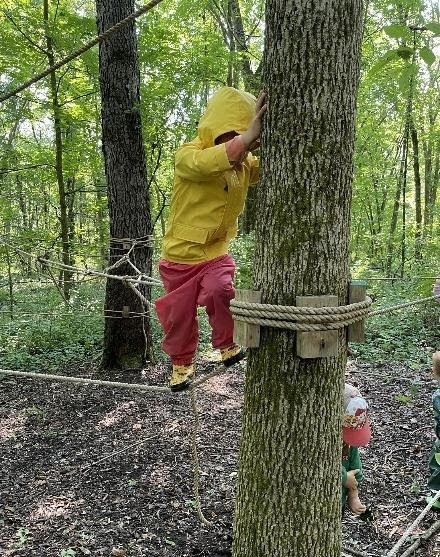
Orientation to Midline: Knowing where the midline is, finding one’s balance, one foot in front of the other.
Symmetrical Movement: swinging on the swing with the pumping action.
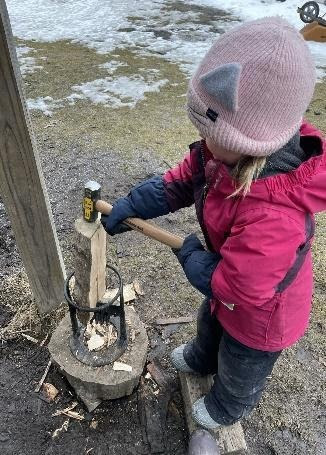
Crossing the Midline: Yardwork, sweeping, raking shoveling, digging, bubble wands, ribbon wands, puppets. With younger children, their eyes will track your movement crossing the midline, even if they are not moving. This is important later when eyes need to track even more when reading.
Reciprocal Movement: A counter rotation of the spine as when skipping, rhythmic hand clapping with partners, etc.
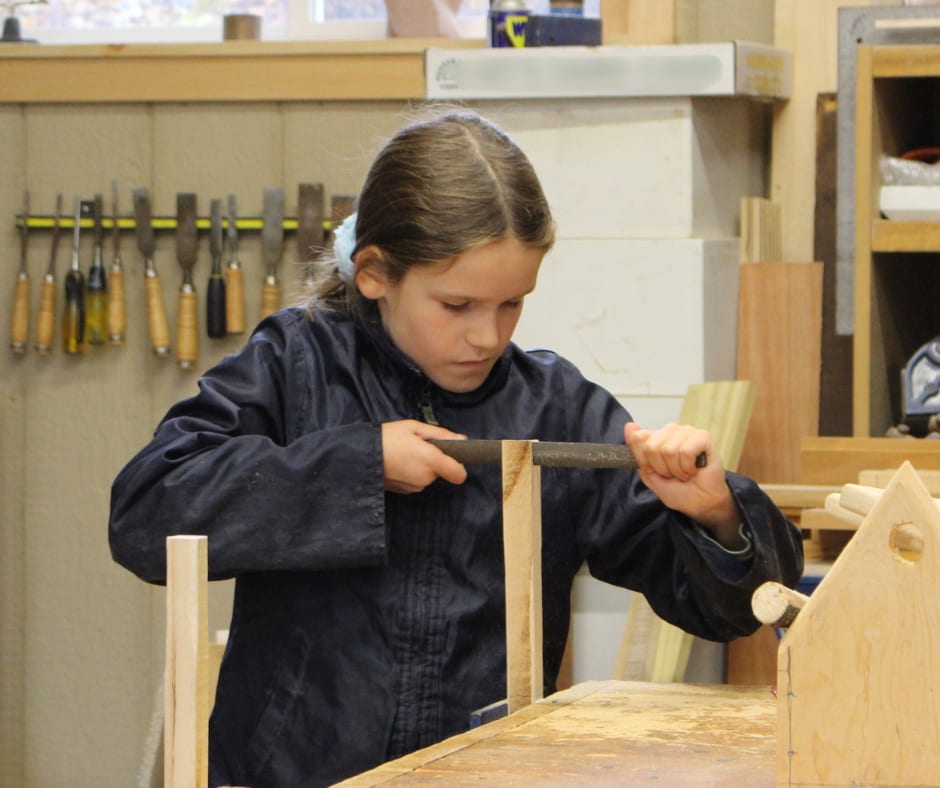
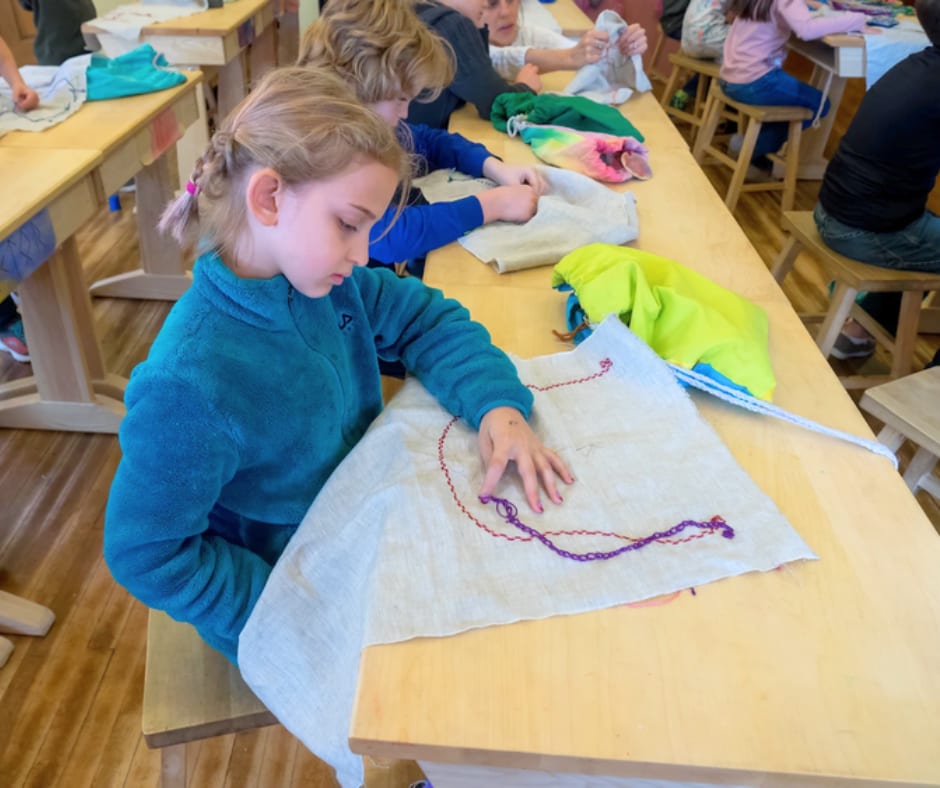
Stability/Mobility Differentiation at Midline: An activity like holding a grater steady with one hand and grating cheese with the other; holding down the paper with one hand while drawing with the other; finger knitting, sewing, sawing; and using a dust pan and small broom.
.jpg)
Bilateral Integration is important for stepping into the first grade.
What begins in Early Childhood through purposeful movement continues to unfold throughout the grades in practical, visible ways. The balance and coordination described here support everyday academic tasks: following a line of text while reading, writing with control; keeping numbers organized on the page; and staying focused for longer periods of work. These abilities develop gradually, built over time through movement that helps children feel at home in their bodies and oriented in space.
.jpg)
In the grade school, this foundation is consciously continued and reinforced. Form drawing develops spatial awareness, crossing the midline, and fine motor control that later support fluent writing and geometry. Handwork—such as knitting, sewing, and woodworking—strengthens concentration, sequencing, and dexterity, while also requiring both hands to work in coordination. Rhythm is woven into main lesson blocks through clapping, marching, catching, throwing, and movements that help children internalize patterns in language and mathematics. Physical education and outdoor play continue to challenge balance, coordination, and perseverance. These in turn are all skills needed for sustained academic work.
.jpg)
Rather than separating movement from learning, Waldorf education understands that they are deeply interconnected. By cultivating and encouraging purposeful movement in the early years and continuing it thoughtfully through the grades, we help prepare children to meet academic challenges with confidence, focus, and resilience.
Curious what this looks like in a real classroom?
The best way to understand how movement and hands-on work build strong learners is to see a Waldorf day in person.