
Every July, Waldorf parents savor a special moment in the school year when they receive an email announcing that annual student grade reports are ready.
When parents open the file, they discover a multiple-page narrative detailing their child’s progress over the past year: Their strengths, challenges, growth and development. The child’s teachers each share multiple paragraphs about the child’s participation in class and their understanding of the subject matter, along with their emotional and social development. They answer the question every parent wants to know: How is my child doing, really?
One thing parents won’t see in those reports is a traditional letter grade.
Research has long shown that traditional letter grades reduce both motivation and achievement. What’s more, grades can define a student and their progress too narrowly.
As with so many facets of Waldorf education, the magic isn’t in the fact that we don’t use traditional letter grades, but in what we do instead.
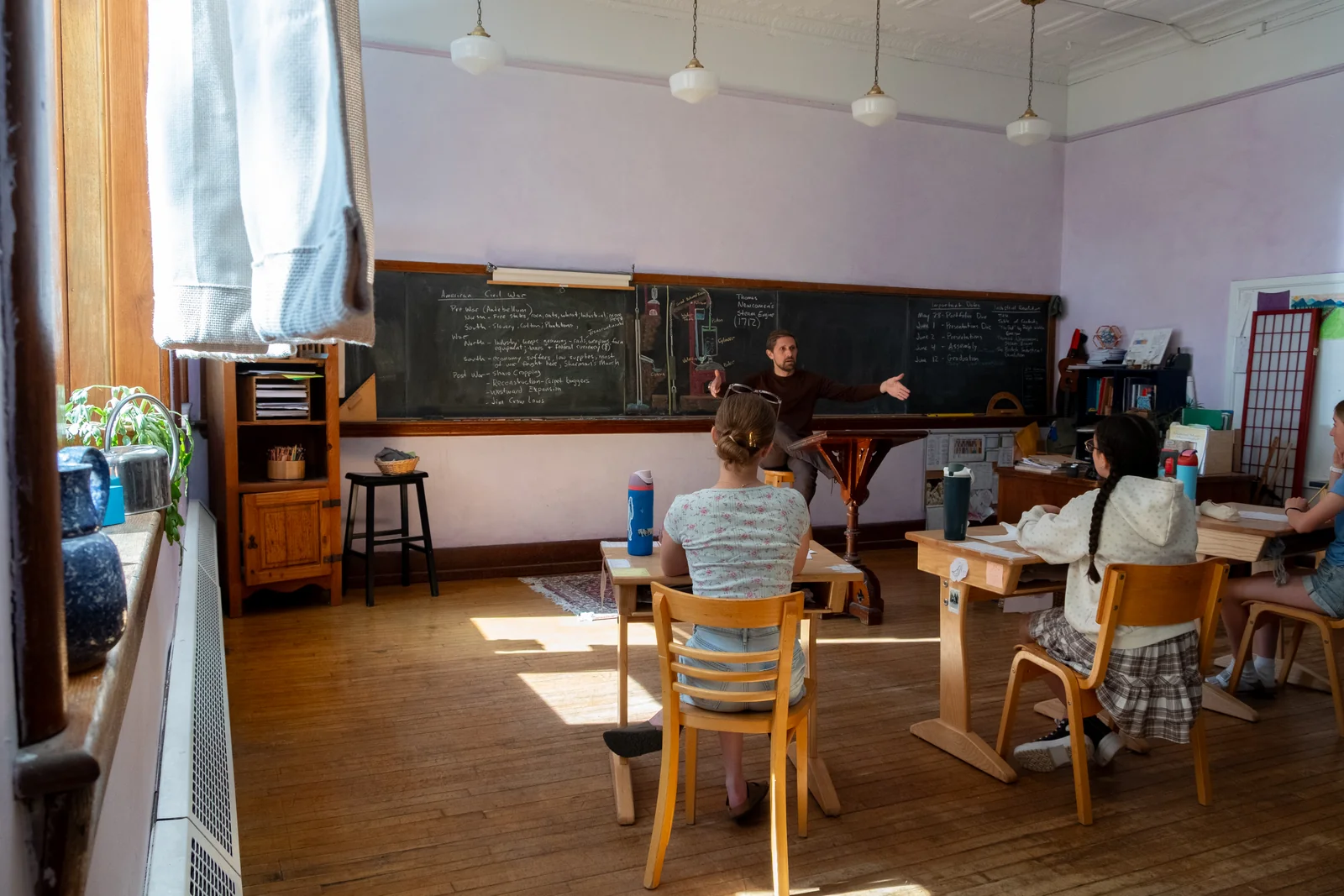
On a daily basis, children are guided and encouraged in the classroom as they work through their Main Lesson, a period of deep, focused learning. Their mistakes are viewed as gifts to learn from, fostering a sense of inner satisfaction for work completed and well done.
Teachers use a holistic approach to assess how well students are grasping the subject matter they’re taught. Rather than judging students’ comprehension based on one moment in time, our teachers have the bandwidth to use a variety of metrics to assess a student’s learning, and have the freedom and flexibility to adjust the curriculum accordingly. Because the class teacher travels with the students through the curriculum for more than one year, the teachers have the time to learn who each student is and what will help each one learn best.
Parents also learn about their children’s academic progress, social development and emotional growth during two annual in-depth conferences, and through regular communication with teachers.