
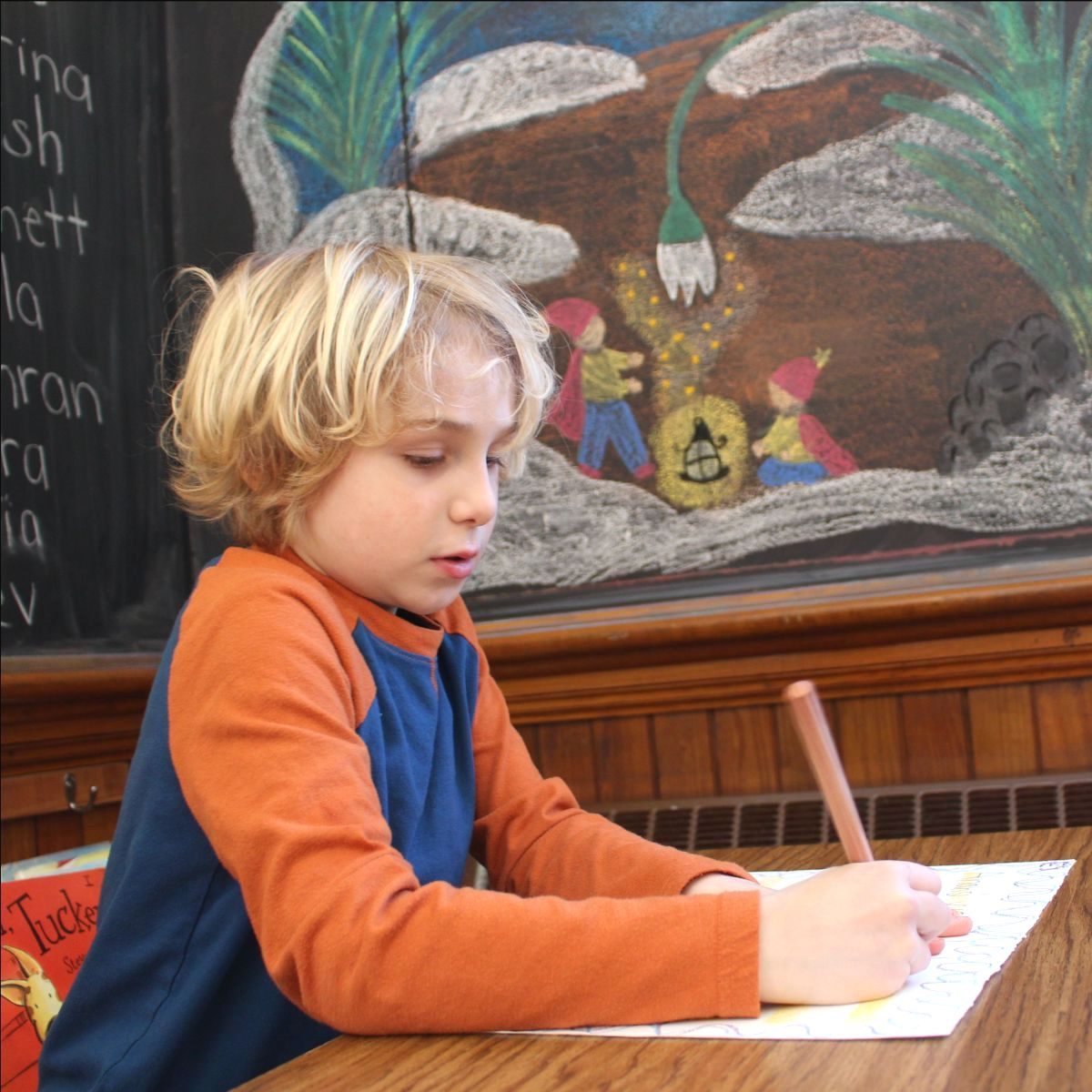
Literacy is defined by the National Literacy Trust as “the ability to read, write, speak, and listen in a way that lets us communicate effectively and make sense of the world.”
Waldorf education is uniquely designed to achieve this outcome. In this, our first seasonal newsletter, it is our pleasure to outline how the Waldorf approach to education gives students a multi-faceted set of skills that help them communicate effectively and successfully navigate the world.
Fostering a Love of Literacy in Early Childhood
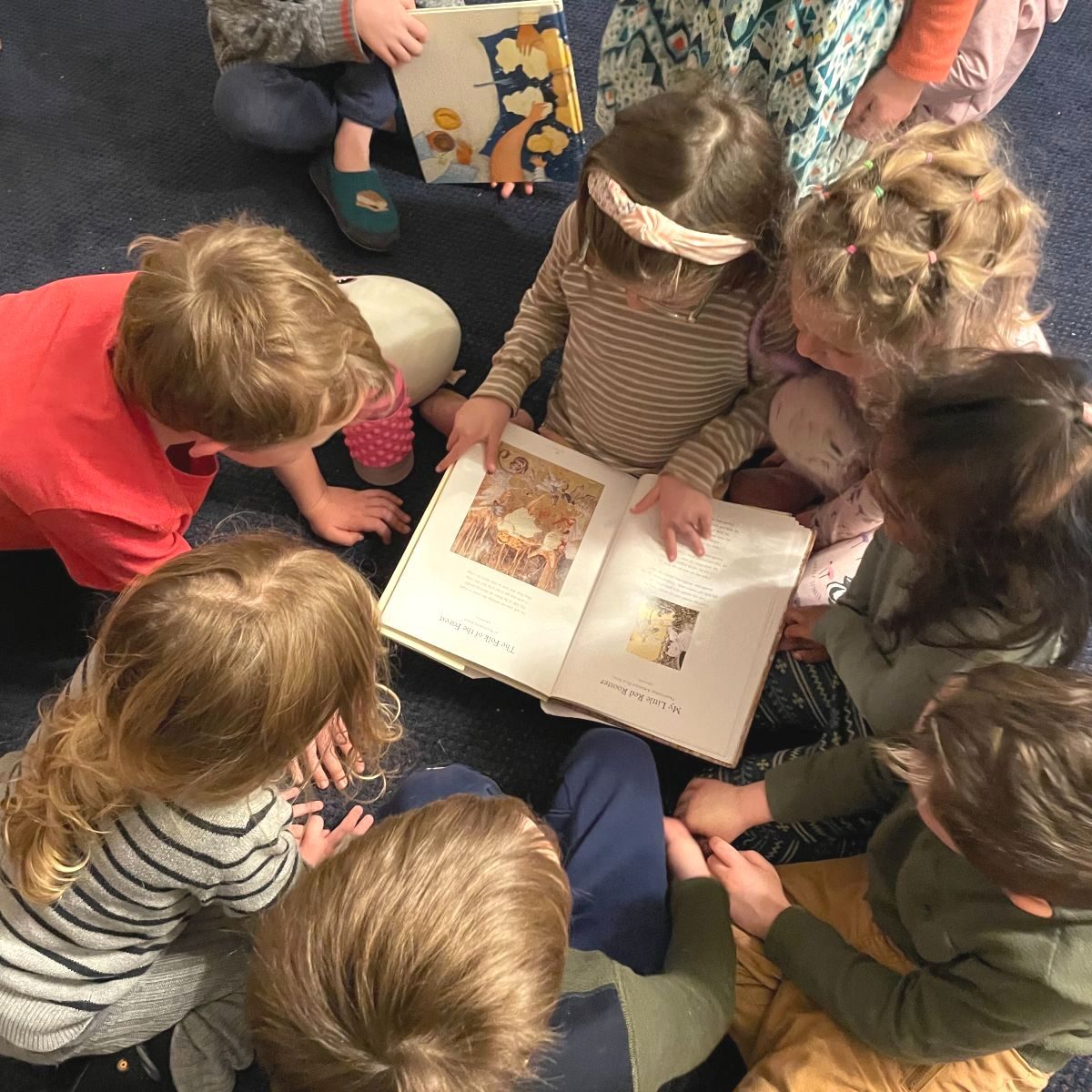
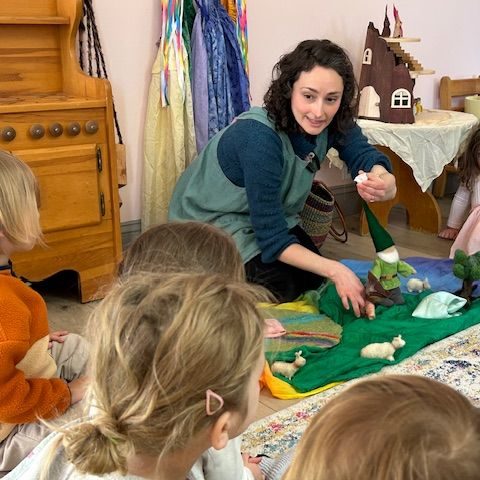
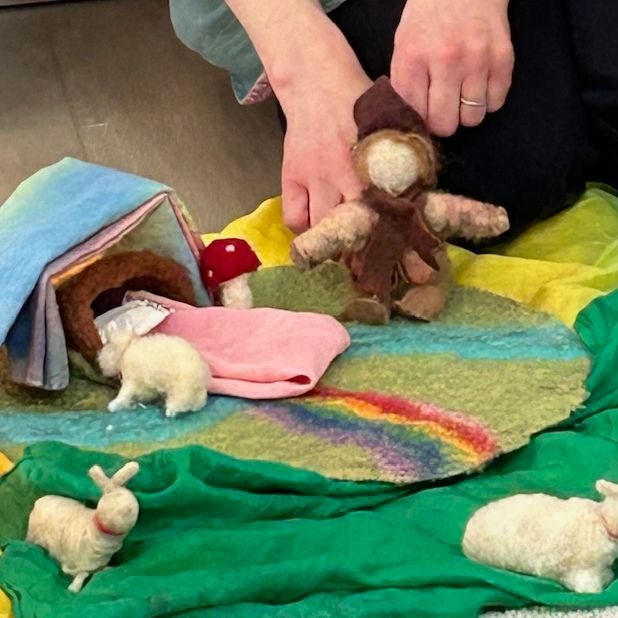
Literacy involves the whole child, not just the intellect. Beginning in preschool, Waldorf education nourishes students with stories, songs, and puppet plays that spark a love of learning and foster a sense of community and belonging.
A seemingly simple puppet play promotes careful listening, looking for story cues, and afterwards reflecting on the characters and story details. Tuning into verbal and non-verbal cues; listening comprehension; sustaining focus; and learning to create mental pictures are the building blocks of literacy.
Listening, Speaking, Drawing, then Writing
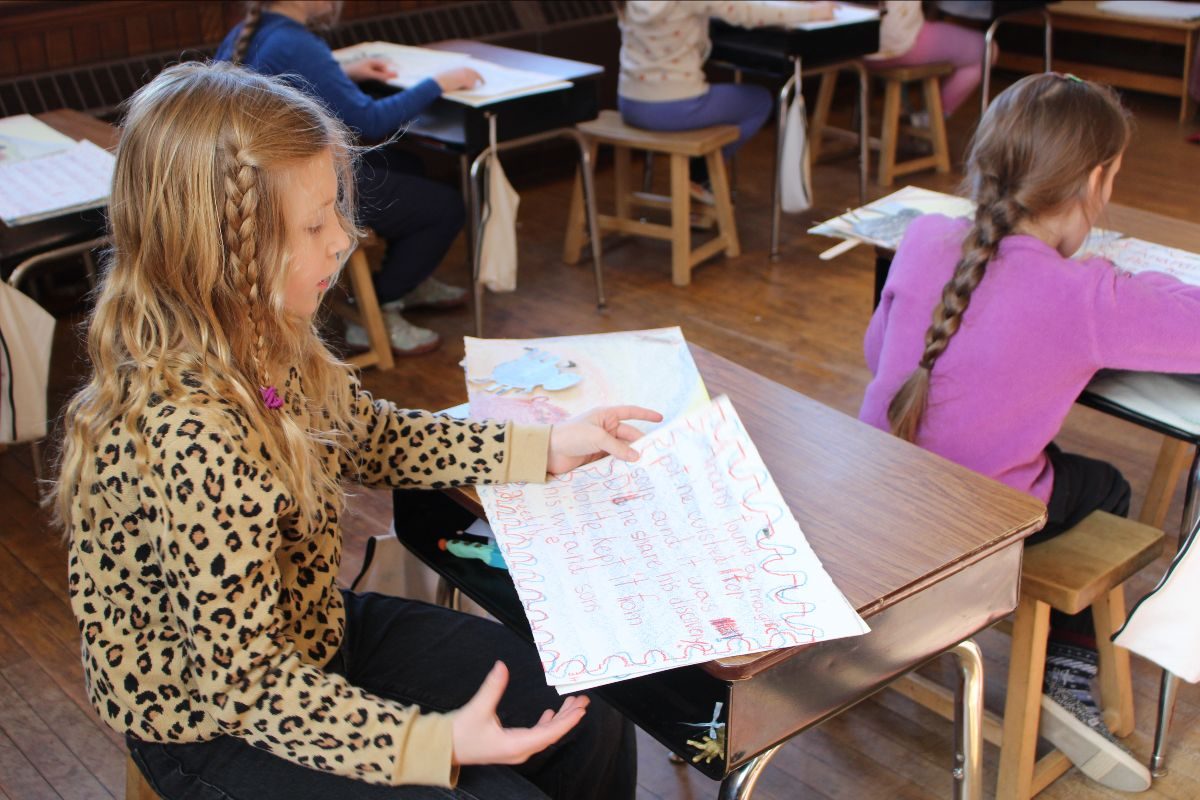
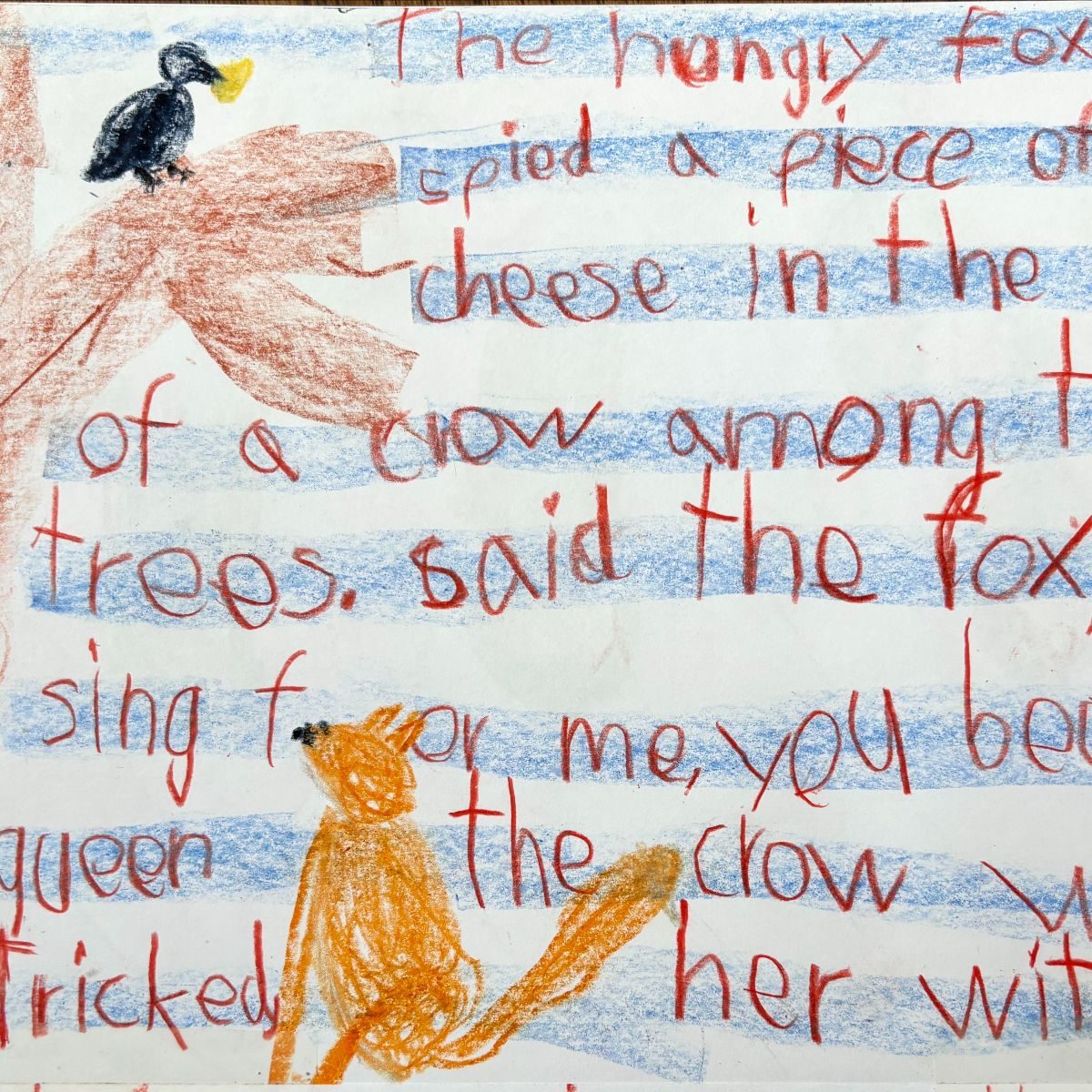
After learning the alphabet and other basics in kindergarten and first grade, second graders experience literacy through multiple modalities, one combination of which is shared here:
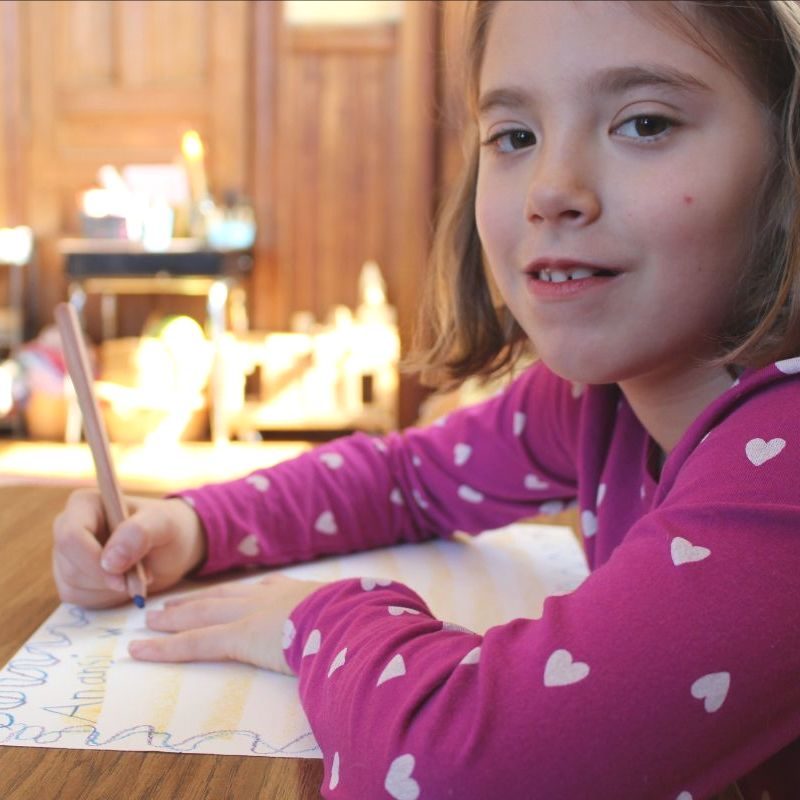
Students first hear a fable told in prose, then poetry, which makes the content come alive in a memorable fashion. Next, they create a guided comprehension drawing and read chorally as a class, taking turns finding familiar phonics patterns in the poem. Lastly, they write the fable down on artistically designed pages that are bound into a unique book. Activities like these touch upon fluency and comprehension as well as decoding skills in reading, writing, and listening.
Students have also been exploring more complex phonics patterns such as -ow and -ou both saying “ow.” During a recent phonics lesson, students were introduced to owl and mouse. They collectively brainstormed a list of words that say “ow” and organized them into spelling patterns. After compiling a lengthy list, the class worked together to write a short story based around owl and mouse using the words they had brainstormed.
Expanding Students’ Worldview
Between grades three and four, students transition from learning to read to reading to learn, and by fifth grade, students develop research-based essays.
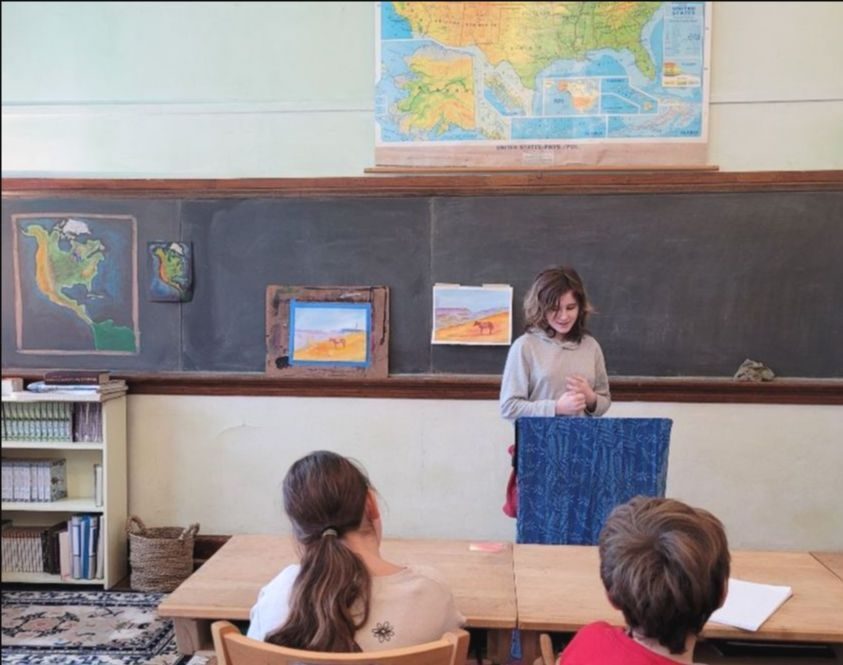
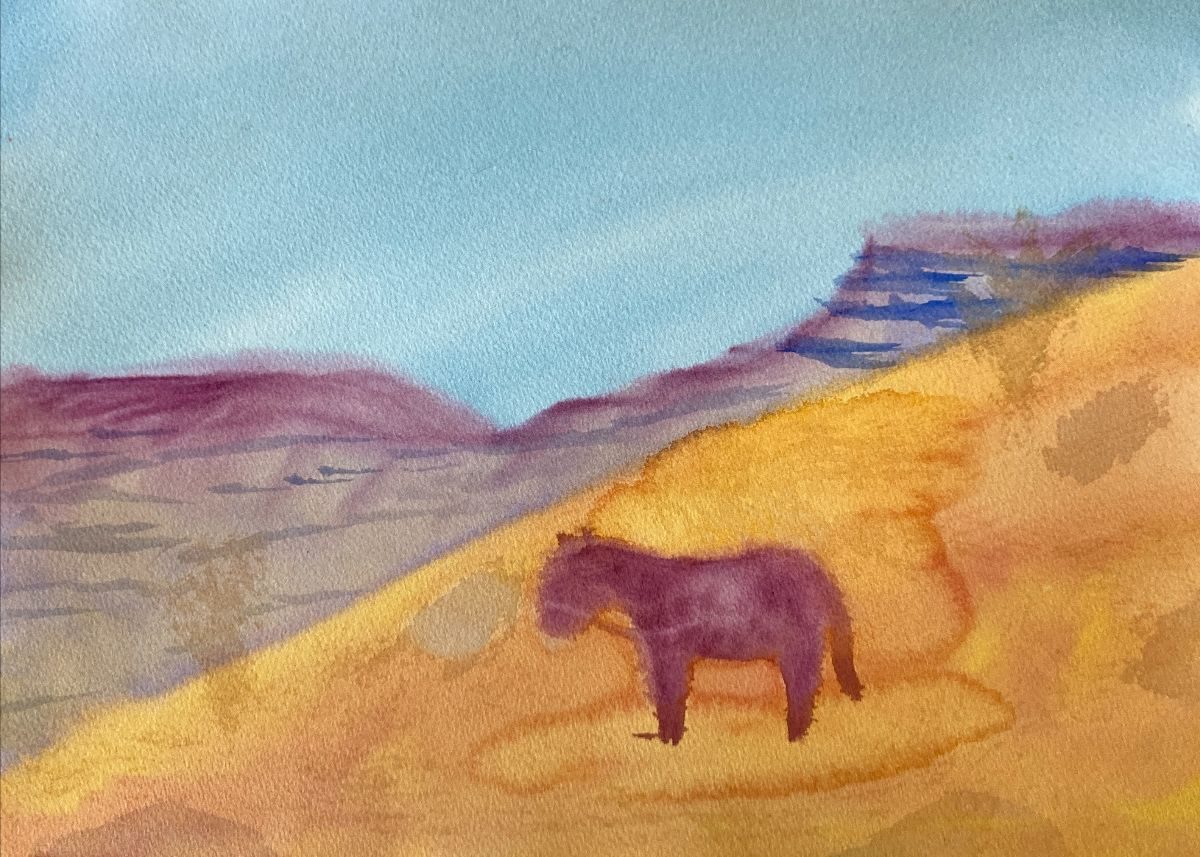
Fifth grade spent a month studying North American Geography and all its varied features. Then, they wrote about one region — the Southwest — and read their essays out loud to the class. By gathering, processing, writing about, and then sharing the information with the group, students gain much more than a superficial understanding of a subject. This learning, as is always the case in a Waldorf school, is enhanced through artistic practice such as making salt dough relief maps of the continent as well as watercolor paintings.
“The Southwest is the home of the Grand Canyon, the Colorado River, and some interesting animals. Some examples are foxes, snakes, and mules. Mules are great for transport. It is one of the only ways to get to the bottom of the Grand Canyon! You can go rafting down the Colorado River, too. As a breed between a horse and a donkey, a mule is good at carrying gear and they have great endurance.” — Fifth grade student
Taking Literacy to the Next Level
After learning in sixth and seventh grade to write argumentative essays in which they create and defend a thesis, students delve into independent projects and longer research papers using MLA citations.
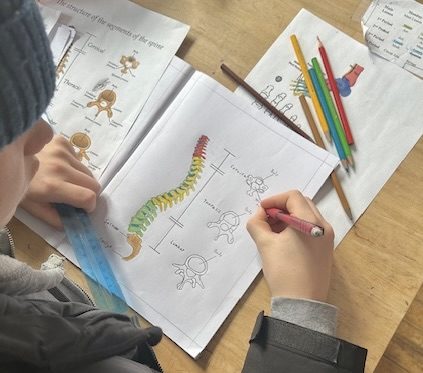
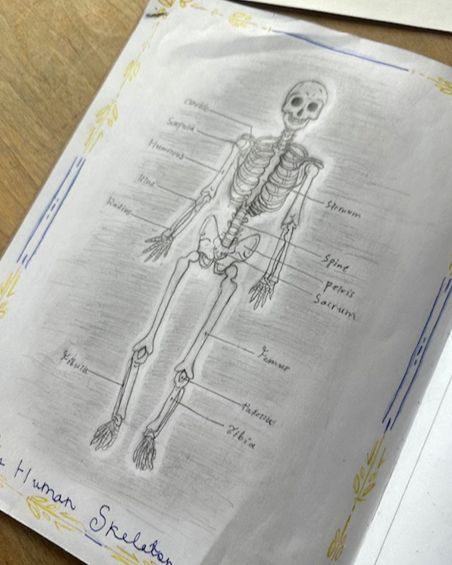
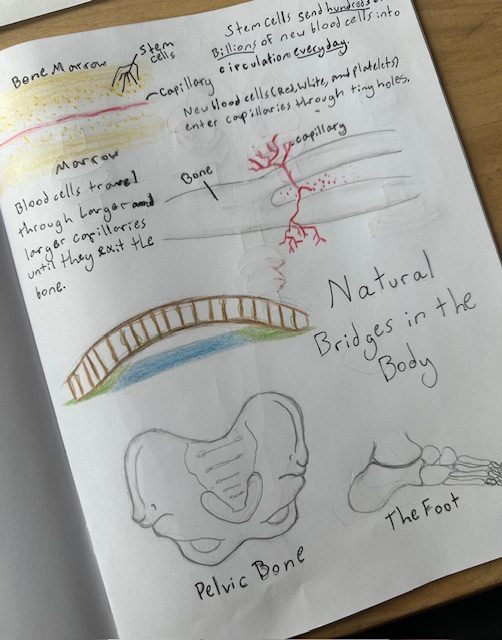
Two of the high peaks in the journey of literacy through the grades are communication and thinking. Students of our eighth grade class are encouraged to hone their expository and essay writing skills, especially through the history and science blocks like this physiology block. Crafting a thesis and topic sentences help to bridge the thoughts, facts and sometimes description-rich passages shared in an essay. Students listen to their classmates’ work and track the progressing thoughts throughout the presentation. Discussions on content and phrasing support us in our path of communicating with others and bringing meaning into our work.
Bringing it All Together
The culminating project in eighth grade is a public presentation of students’ personally chosen long-term projects. This brings together the multitude of skills they have gathered throughout the grades: harnessing curiosity to gather experience and research; listening, learning, asking questions and thinking deeply about a topic; writing an extensive paper about their chosen project using citations and proper formatting; developing a hands-on component to supplement the writing; and lastly, sharing their knowledge with the community through public speaking.