
This is the start of an occasional series examining our most frequently asked questions about Waldorf education. Written by parents, teachers and staff, they aim to provide a candid and forthright perspective on the topics prospective parents are most curious about. Want more honest perspectives about Waldorf? Book a tour today!
My son, now a rising fifth grader, started Waldorf’s Forest Kindergarten as a Little Acorn at age 3. By the time he reached kindergarten age, we had fallen in love with Waldorf and the well-balanced, human-paced days he enjoyed on the beautiful campus.
But before we could sign on to a Waldorf education for his elementary grades, I needed to address what I viewed as the elephant in the room: Are Waldorf kids really not taught to read until third grade? As a lifelong journalist and writer, I cared about childhood literacy and a lifelong love of literature more than the average bear. I needed to learn more.
I started by talking to parents with children at the Lower School. I heard the most magnificent stories about first-graders learning letter shapes by tracing the shapes in the sand, and about second-grade classes walking to High Rock Park with early readers to enjoy their books in the sunshine.
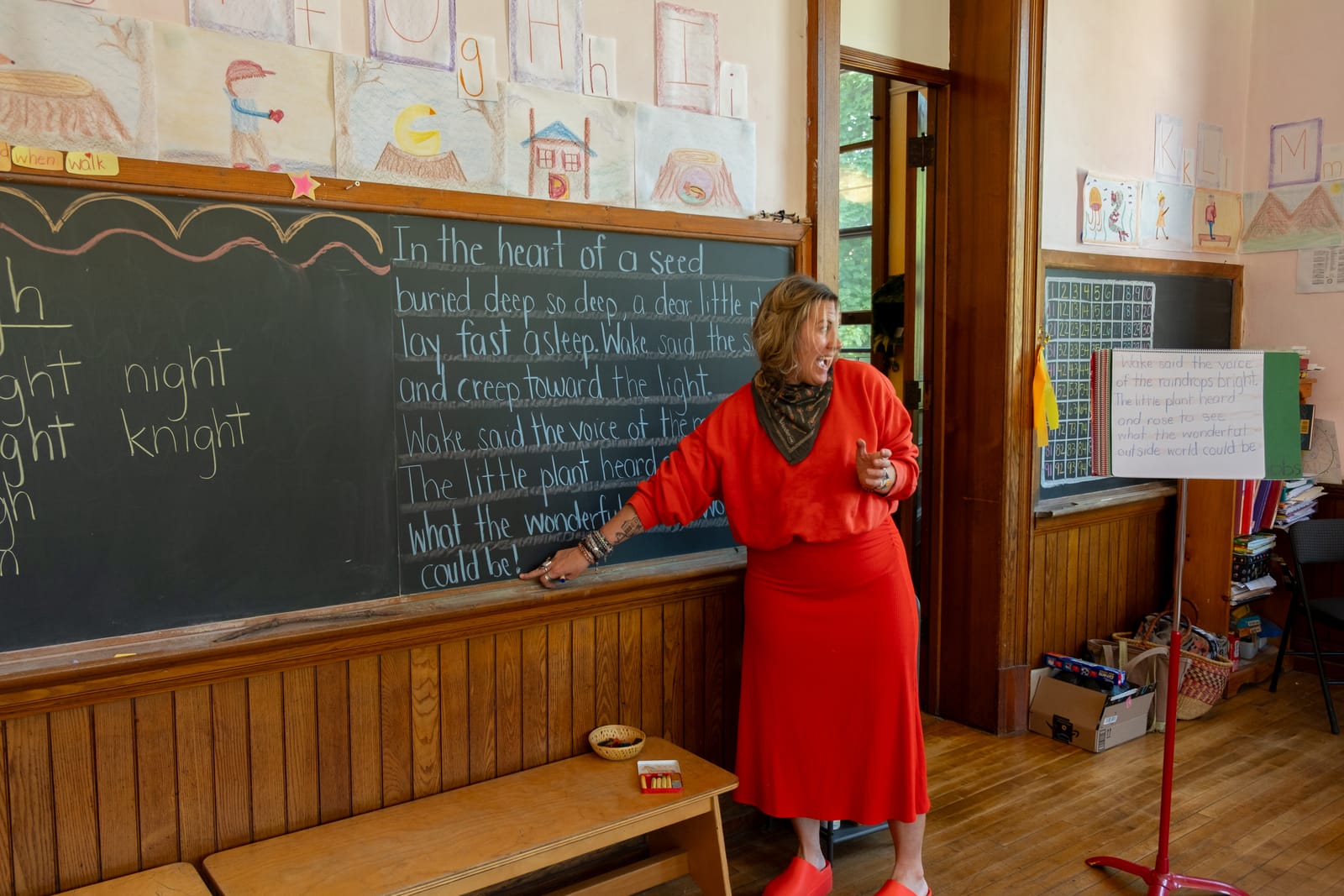
I also visited the first-grade classroom, where teacher Kristyn Gibbs was prepping the room for the next day of learning. The blackboard was adorned with capital and lower-case letters written in pastel chalk. She had just told her students a story about baking cookie batter, emphasizing the ending sound of “r.” This didn’t look or sound like not learning to read. It looked like a beautifully measured approach to learning language arts.
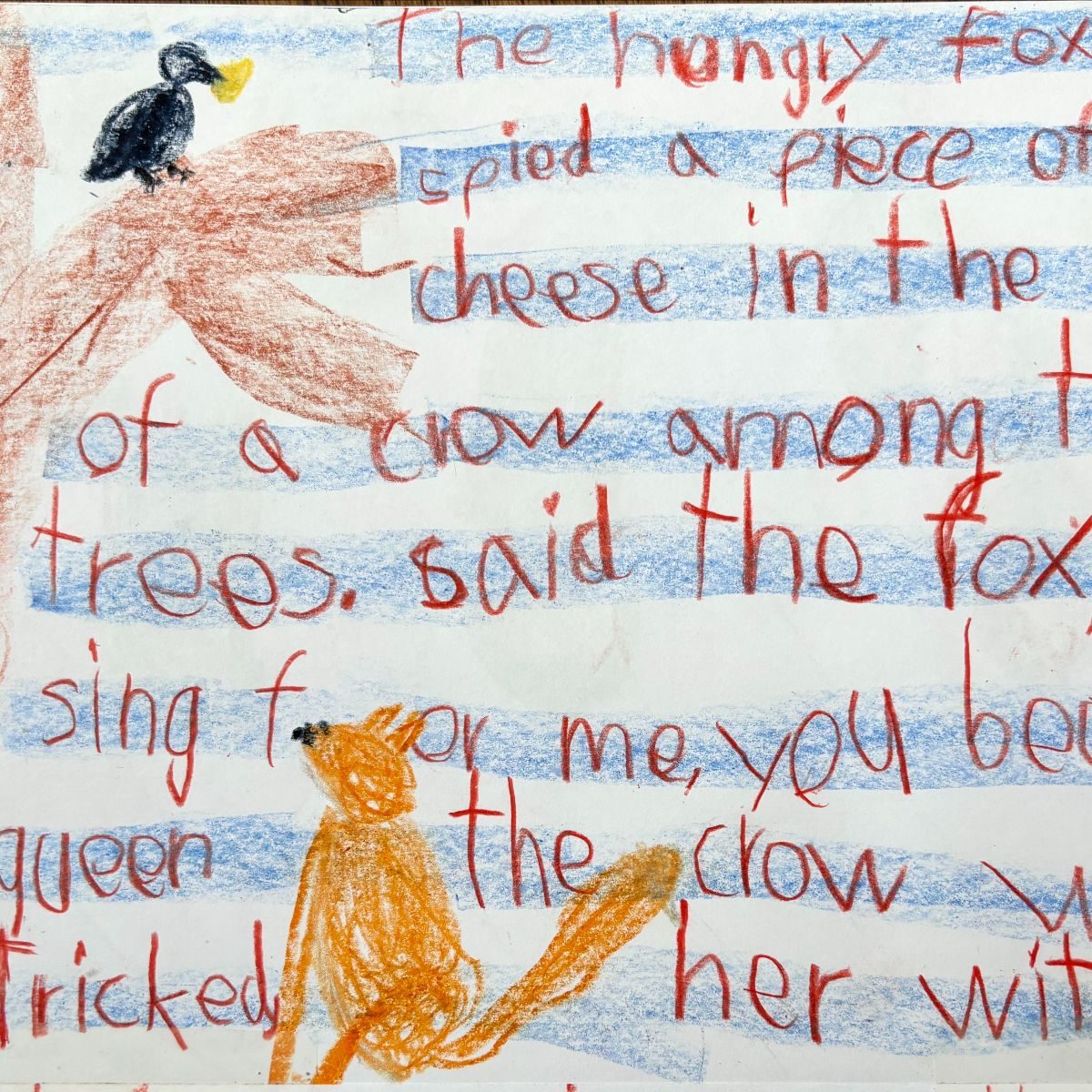
Visit our school and see what our approach to teaching reading looks like firsthand.
We enrolled our son in the Lower School when he was 6. At the first parents’ night, his teacher, Farida Doriwala, looked out at an audience of parents that included engineers, special education teachers, college professors and others who likely cared as much about childhood literacy as I did.
“I know that your children already know the alphabet,” she said as she drew a letter M in the shape of two mountains on the chalkboard. “Let me show you what we’re learning.”
At the end of her magical story about the letter M and the mighty men who climb mountains, I was so impressed with the deep and comprehensive phonics lesson, I leaned over to another parent and said: “I don’t think I knew what the letter M was before this.” The approach taught me that it’s one thing to memorize a letter shape, but another entirely to tie that letter shape and the sound it makes to the greater world.
I only grew more impressed as his education continued. By the end of first grade, many children were picking up the early-reader books strewn throughout the classroom and reading them out loud. There was no pressure or sight-word flash cards for the kids who weren’t doing so, only more thoughtful instruction and encouragement. Children with IEPs may have visited the amazing Joanne Fuson, the special education teacher who famously has a game for almost everything. Nobody felt slow. Nobody felt left behind.
It’s not that reading is hidden or kept away from children who are ready; it simply isn’t pushed on children before it’s developmentally appropriate.
When my son was in second grade, I witnessed another unique aspect about Waldorf: Teachers can adjust their curriculum to the students in front of them rather than pushing their students to keep up with a curriculum that doesn’t fit. This particular class was ready to read, and hungry for more opportunities to do so. So one afternoon, Ms. Doriwala presented each child with a reader she knew they would be successful in decoding. After the class successfully read the book, she lit a candle, and told them that the light of knowledge belonged to them now.
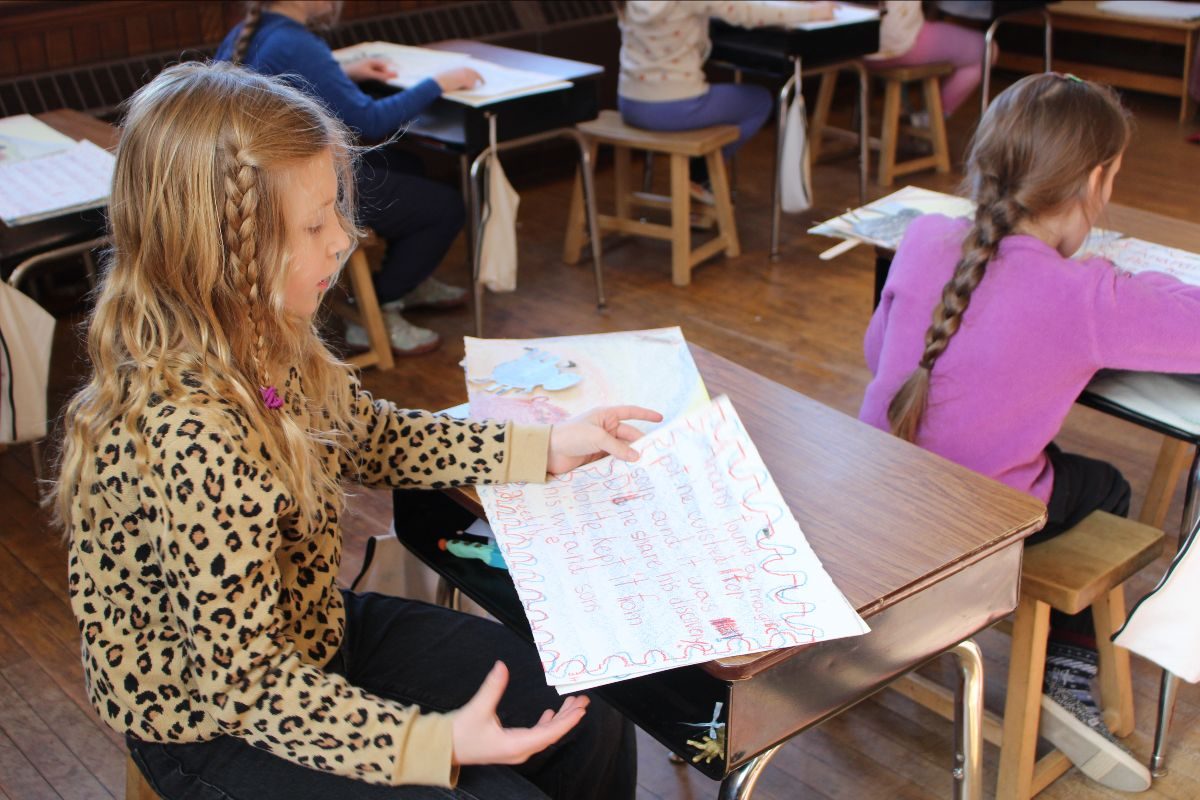
That moment was possible because Ms. Doriwala was deeply attuned to her class, and had the flexibility to meet them with exactly the right challenge at exactly the right moment. What a gift.
Here’s what some other parents had to say about watching their kids learn to read the Waldorf way:
“When my daughter’s class hit third grade, their ability to read was just … there. They had such a strong foundation that there was no struggle, only joy.”
“My son struggled with reading in public school. Waldorf changed everything. Free from pressure, he learned at his own pace and fell in love with reading. Today, he picks up books on his own — something I never thought I’d see.”
You can find lots of great information about Waldorf’s approach to reading on our website, especially in this piece from our literacy taskforce. But nothing compares to seeing how engaged and happy kids are when they’re learning. Schedule a tour to see.